
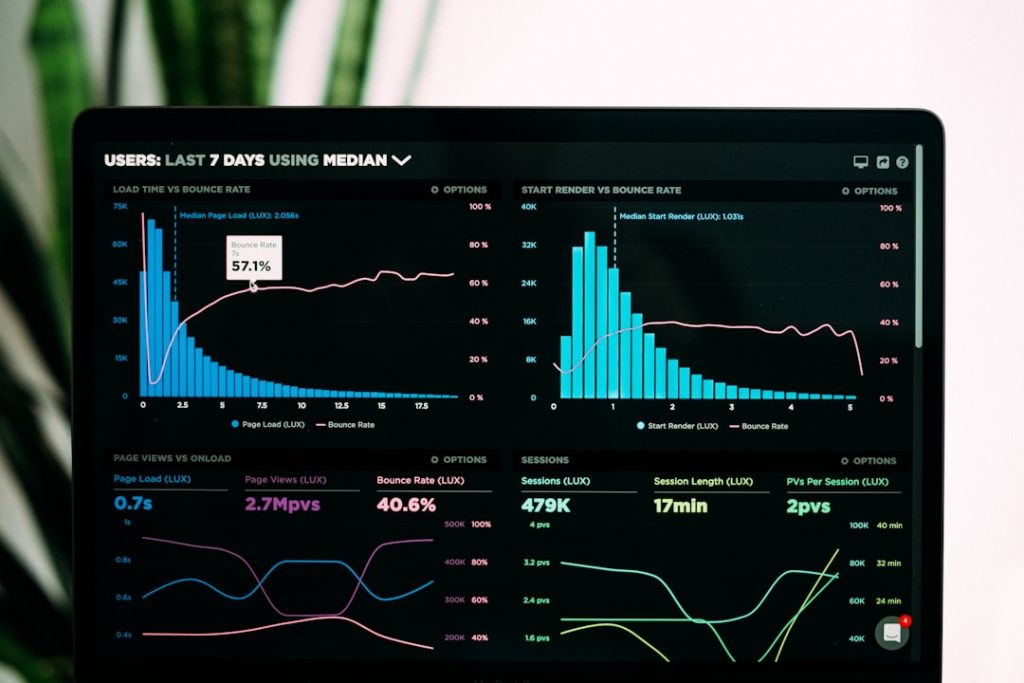
A financial dashboard is a centralized visualization tool that displays key financial metrics and performance indicators for business organizations. It consolidates data from multiple sources into a single interface, enabling stakeholders to rapidly evaluate organizational financial status. The dashboard transforms complex financial data into accessible visual formats, allowing decision-makers to extract critical insights efficiently.
This functionality proves essential for executives and managers who require real-time performance monitoring without analyzing detailed reports or raw data sets. Financial dashboards incorporate various visual elements including graphs, charts, and tables to present core metrics such as revenue, expenses, profit margins, and cash flow. These graphical representations improve data interpretation and enable rapid temporal comparisons or benchmarking against industry standards.

A typical implementation might feature line graphs tracking quarterly revenue progression, facilitating trend identification and anomaly detection. Through data consolidation and visual presentation, financial dashboards function as essential tools for strategic planning and operational optimization.
Key Takeaways
- A financial dashboard consolidates key financial data for quick, informed decision-making.
- Tracking metrics like revenue, expenses, and profit margins is essential for maximizing profits.
- Regular analysis of revenue streams helps identify growth opportunities and optimize income sources.
- Monitoring costs closely enables effective expense management and improved profitability.
- Setting clear financial goals and using the dashboard to track progress supports strategic profit growth.
Key Metrics for Profit Maximization

To maximize profits, businesses must focus on several key metrics that directly influence their bottom line. One of the most critical metrics is the gross profit margin, which measures the difference between revenue and the cost of goods sold (COGS). A higher gross profit margin indicates that a company retains more money from each sale after covering production costs.
For example, if a company generates $1 million in sales with COGS of $600,000, its gross profit margin would be 40%. Monitoring this metric allows businesses to assess pricing strategies and cost management efforts effectively. Another essential metric is the net profit margin, which reflects the overall profitability of a business after accounting for all expenses, including operating costs, taxes, and interest.
This metric provides insight into how efficiently a company converts revenue into actual profit. For instance, if a business has total revenues of $1 million and total expenses of $900,000, its net profit margin would be 10%. By analyzing net profit margins over time or in comparison to industry standards, companies can identify areas for improvement and implement strategies to enhance profitability.
Utilizing the Financial Dashboard for Decision Making

The financial dashboard is not merely a reporting tool; it is an essential component of informed decision-making. By providing real-time data and visualizations, it empowers leaders to make strategic choices based on current financial conditions rather than relying on outdated information. For example, if a company notices a sudden drop in sales through its dashboard, management can quickly investigate the cause—be it market changes, supply chain disruptions, or shifts in consumer behavior—and take corrective action before the situation worsens.
Moreover, the financial dashboard facilitates scenario analysis by allowing users to model different financial outcomes based on varying assumptions. For instance, a business might use its dashboard to simulate the impact of increasing prices by 10% on overall revenue and profit margins. This capability enables decision-makers to weigh potential risks and rewards before implementing changes.
By integrating predictive analytics into the dashboard, organizations can further enhance their decision-making processes by forecasting future trends based on historical data.
Tracking and Analyzing Revenue Streams
Understanding revenue streams is crucial for any business aiming to optimize its financial performance. A financial dashboard can help track various sources of income—such as product sales, service fees, and subscription revenues—allowing companies to identify which streams are most profitable. For instance, a software company might analyze its revenue from different subscription tiers to determine which plans attract the most customers and generate the highest margins.
In addition to tracking revenue sources, businesses should analyze the performance of these streams over time. This analysis can reveal seasonal trends or shifts in consumer preferences that may affect sales. For example, an e-commerce retailer might notice that certain products sell better during specific months or holidays.
By leveraging this information, companies can adjust their marketing strategies and inventory management practices to capitalize on peak sales periods while minimizing excess stock during slower times.
Managing Costs and Expenses
| Metric | Current Value | Target | Change (MoM) | Status |
|---|---|---|---|---|
| Revenue | 1,250,000 | 1,300,000 | +5% | On Track |
| Net Profit | 320,000 | 350,000 | +3% | Needs Improvement |
| Operating Expenses | 450,000 | 400,000 | -2% | Over Budget |
| Cash Flow | 150,000 | 200,000 | +10% | On Track |
| Accounts Receivable | 300,000 | 280,000 | -1% | On Track |
| Debt to Equity Ratio | 1.2 | 1.0 | +0.1 | Watch |
Effective cost management is integral to maximizing profitability. A financial dashboard provides insights into various expense categories—such as fixed costs (rent, salaries) and variable costs (materials, utilities)—enabling businesses to identify areas where they can cut costs without sacrificing quality or service. For example, if a company notices that its utility expenses have increased significantly over several months, it may investigate energy-saving measures or renegotiate contracts with suppliers.
Furthermore, tracking expenses in real-time allows organizations to maintain tighter control over their budgets. By setting budgetary limits for different departments or projects within the dashboard, managers can monitor spending against these limits and take corrective action when necessary. This proactive approach helps prevent overspending and ensures that resources are allocated efficiently across the organization.
Identifying Trends and Opportunities

A well-designed financial dashboard not only highlights current performance but also helps identify emerging trends and opportunities for growth. By analyzing historical data alongside real-time metrics, businesses can spot patterns that may indicate shifts in market demand or consumer behavior. For instance, if a retail company observes a consistent increase in online sales over several quarters while brick-and-mortar sales stagnate, it may decide to invest more heavily in its e-commerce platform.
Additionally, dashboards can facilitate competitive analysis by benchmarking a company’s performance against industry standards or competitors. By understanding where they stand relative to others in their sector, businesses can identify gaps in their offerings or areas where they can differentiate themselves. For example, if a company finds that its customer acquisition costs are significantly higher than those of competitors, it may explore alternative marketing strategies or partnerships to improve efficiency.
Setting and Monitoring Financial Goals
Establishing clear financial goals is essential for driving business success. A financial dashboard can serve as a central hub for tracking progress toward these goals, whether they involve revenue targets, profit margins, or cost reductions. By visualizing key performance indicators (KPIs) related to these objectives, organizations can maintain focus on their strategic priorities and make adjustments as needed.
For instance, if a company sets a goal to increase its net profit margin by 5% over the next year, it can use its dashboard to monitor relevant metrics regularly. If progress stalls midway through the year, management can analyze contributing factors—such as rising costs or declining sales—and implement corrective measures promptly. This ongoing monitoring ensures that businesses remain agile and responsive to changing conditions while staying aligned with their long-term objectives.
Implementing Strategies for Profit Growth
To achieve sustained profit growth, businesses must implement targeted strategies based on insights gleaned from their financial dashboards. One effective approach is diversifying revenue streams by exploring new markets or product lines. For example, a company that primarily sells physical goods might consider launching an online course or subscription service related to its expertise.
By leveraging existing resources and customer relationships, businesses can tap into new sources of income while mitigating risks associated with reliance on a single revenue stream. Another strategy involves optimizing pricing models based on data-driven insights from the dashboard. Companies can experiment with different pricing strategies—such as dynamic pricing or bundling products—to maximize revenue potential.
For instance, an airline might use historical booking data to adjust ticket prices based on demand fluctuations throughout the year. By continuously refining pricing strategies in response to market conditions and consumer behavior, businesses can enhance profitability while remaining competitive. In conclusion, leveraging a financial dashboard effectively allows organizations to navigate the complexities of modern business environments with greater agility and precision.
By focusing on key metrics for profit maximization and utilizing data-driven insights for decision-making, companies can position themselves for sustainable growth and success in an ever-evolving marketplace.

